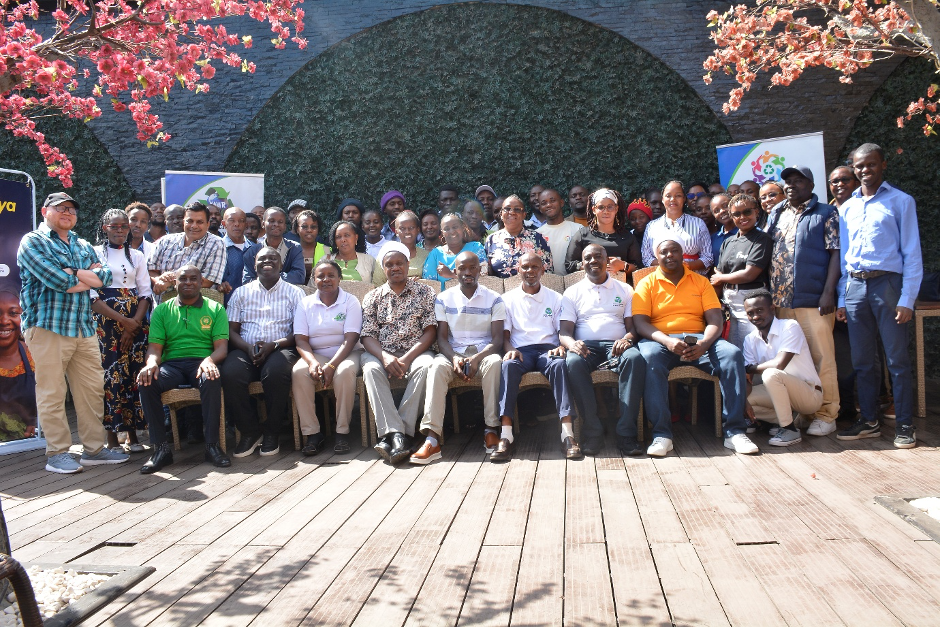
KAWR held an EPR Compliance Workshop on 5th Dec 2025 at Best Western Plus Meridian Hotel, Nairobi. The Event, which was themed “Shaping the Future of EPR: Building Strong Systems and Clear Compliance Processes for Recyclers,” was convened in response to the evolving EPR landscape, which included the protracted legal case and the ensuing conservatory Order against EPR implementation, which was lifted on 20 November 2025.
The case (ELC EP PET/EOO3/2025), however, is still valid but transferred to the Nairobi Environment Court, where it is scheduled to be mentioned on 8th December 2025 for further directions. Against this backdrop, KAWR convened this session to align waste value chain players with the compliance requirements under the EPR Regulation (2024) and to embed clear structures in their businesses to ensure a systematic transition that will translate into long-term sustainability. The stakes couldn’t be higher; the recycling industry truly hinges on how well the sector will adapt to the EPR Framework.

In Photo; Dr. Ayub Macharia from NEMA making his presentation in the forum.
The National Environment Management Authority (NEMA), through the Director of Enforcement, Dr. Ayub Macharia, expounded in great depths the compliance requirements recycling businesses must have moving forward. From licensing requirements, digital traceability features for waste transport, transparent and auditable records, segregation requirements during waste transportation, and declaration obligations, the emphasis was clear: compliance is no longer optional. It is the yardstick that will determine the sector’s longevity and continued success, and it positions recycling as one of the most critical pillars in Kenya’s circular economy agenda.
However, despite the anticipated EPR Subsidies meant to support the actors in the waste management sector, the Dr. Macharia highlighted some key challenges that have hindered this, with the major one being the lack of commitment from producers to meet their EPR Obligation as provided in section 13 of the Sustainable Waste Management (SWM) Act, 2022. Though many producers have declared to fulfill these obligations via a compliance scheme (Producer Responsibility Organization), many remain freeloaders in these schemes, and their responsibility, consequently, is shouldered by a few responsible producers. NEMA, in response, have introduced more stringent measures which will include direct prosecution of retailers who shelve products from non-compliant producers. Advance warnings have been issued to major retail outlets, with crackdowns expected from 1st February, 2026.
The transition to the National Waste Information System as provided under section 8 of the SWM Act, 2022 which mandates NEMA to “Establish a national waste information system for recording, collecting, managing, and analyzing data, including the quantity and classification of waste, a register of licensed waste operators, status of waste management activities, impact on health and environment, county-level services, compliance information, and other data necessary for effective administration” was also an issue many players in the sector sought clarity on. Peter Gitonga, Managing Director CSharp Ngulu Limited; the entity appointed by NEMA to develop the system, shared the prototype specifications of the system. The comprehensive nature of the system was apparent which automates traceability of waste material flow right from the post-consumer stage right to the point of reintegration(for recyclables) and final disposal for non-recyclables. The system is inextricably linked with compliance at material flow traceability and reporting through the various waste management stages is only possible via compliant waste actor across the various jurisdiction. Since the system will be central to EPR subsidization processes, the need for strong organizational structures and compliance in waste-value chain businesses was further underscored.
And while some few components of the system remain unclear and exposed to risk of manipulation and erroneous data entry, especially at the consumer stage, its overall shape, structure, and comprehensive approach demonstrated the capacity to redefine the waste management sector for the better. Embracing technology and digitization in the waste management sector was a call repeatedly reiterated in the workshop.
The EPR Fee calculation published by NEMA listed some parameters to be included for EPR Fee determination. The general formula for calculating the EPR fee in Kenya could be simplified as follows:-
EPR fee = Cost of (waste handling + waste processing/product chemistry + waste disposal + Enablers) x Quantity.
For this formula to be representative and fair for the sector, it is imperative for the people who are in the waste management sector to interrogate the Market Cost Indexes, which will be used for EPR Fee calculation for the various waste fractions, in order to safeguard accuracy and precise representation. KAWR, as the national umbrella body for the entire waste value chain actors had been tasked by NEMA to develop accurate market indexes for various waste fractions for the said purpose. The session offered a crucial chance for participants to examine and interrogate the market indexes KAWR had developed, as well as complement and refine KAWR’s proposition to ensure the final submission would be an accurate representation of the sector.
The Association is still receiving responses from waste value chain actors regarding the stated objective. Any proposals on the Market Cost Indexes may be submitted to info@kenyarecyclers.co.ke no later than 11th December 2025. Additional details on the project can also be requested through the same contact.
JiPay, a fintech innovation company showcased their automated micro-savings platform designed to help users save seamlessly through routine mobile transactions. Their solution supports financial discipline and inclusion, particularly for individuals and small enterprises in informal sectors. Their presence added valuable insight into how technology can streamline financial flows within the waste value chain.