Third Policy & Action Session under the Theme: “Access to Green Finance & Inclusive Circular Transitions”
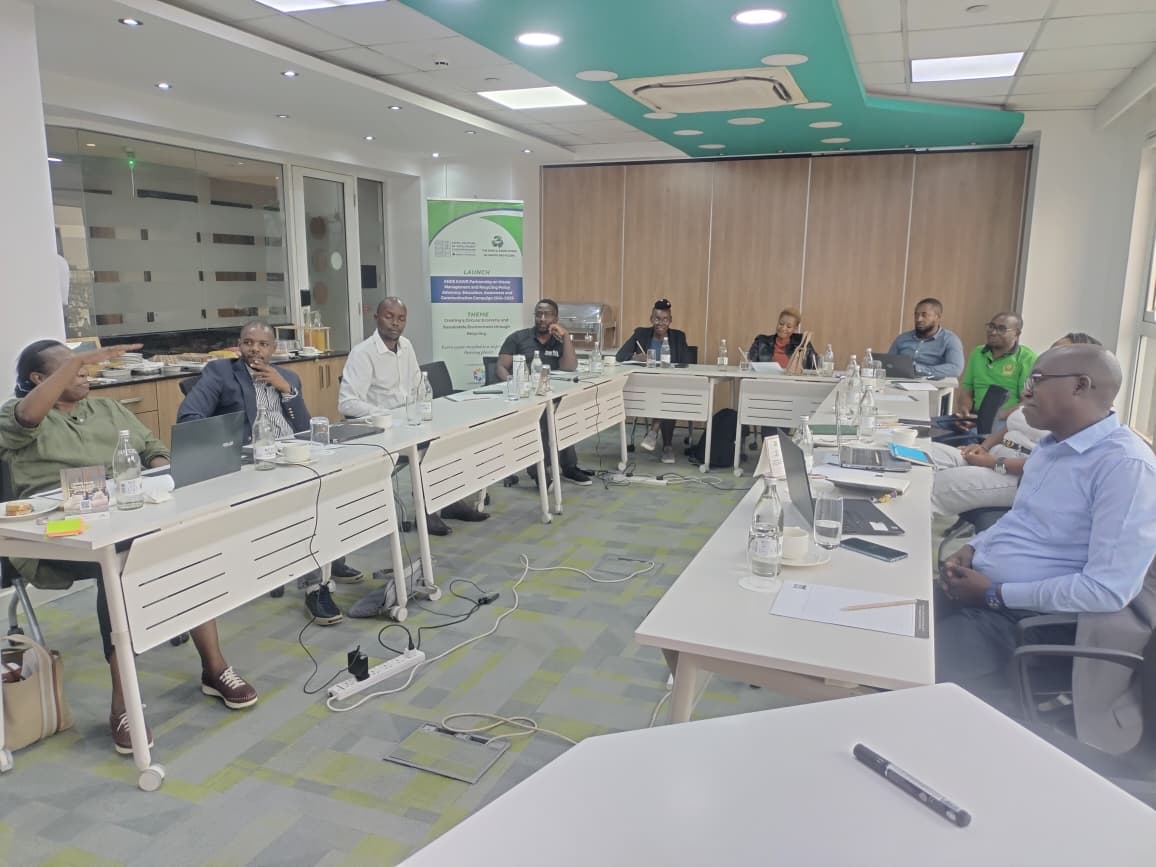
Kenya Association of Waste Recyclers (KAWR) and Aspen Network of Development Entrepreneurs (ANDE) East Africa convened their third Policy Working Group Session on 20th February 2026.
Building on previous engagements that examined policy frameworks and implementation pathways under the Sustainable Waste Management Act, 2022, this session focused on measurable sector progress and implementation outcomes. Over the past months, KAWR has undertaken sustained engagements across county governments, national agencies, development partners, and private sector actors; translating the objectives of the partnership into tangible sector results.
Key Outcomes Achieved
Notable milestones realized in recent months include:
• Convening EPR cost validation workshops and technical working groups toward the development of an EPR Costing Module for the waste management sector, proposed for consideration by the National Environment Management Authority in the calculation of EPR incentives.
• Advisory support to county governments in domesticating the Sustainable Waste Management Act, 2022, into county legislation, including engagements with Nakuru County and Kisumu County, in compliance with statutory requirements.
• Technical participation in the development of national reusability guidelines under the Ministry of Environment Climate Change and Forestry.
• Contribution to the prototyping, review, and sector validation of the National Waste Management Information System.
• Regulatory engagement with the Kenya Revenue Authority on VAT treatment, input documentation recognition, and transitional compliance measures.
• Ongoing advocacy for harmonization and abolition of cess fees affecting cross-county waste movements.
• Formal sector submissions on draft regulations, including the Draft Electrical and Electronic Waste Management Regulations, 2025, and the Draft Environmental (Strategic Assessment, Integrated Impact Assessment and Audit) Regulations, 2025.
• Engagements addressing occupational health risks within the waste stream, including mitigation strategies for lead exposure.
• Participation in national roundtables linking circular economy reforms with investment ecosystems and capital markets.
• International collaboration centered around technical cooperation and knowledge exchange with Indian Plastic Institute.
These actions collectively reflect progress under key deliverables of the KAWR–ANDE partnership framework.
1. Advocacy for Policy Reforms
KAWR engagements under the partnership have contributed to:
• County-level legislative drafting aligned with national waste management laws.
• Submission of memoranda on draft County Sustainable Waste Management Bills.
• Structured proposals on EPR incentive and responsibility frameworks.
• Engagements aimed at regulatory clarity for electronic and hazardous waste streams.
2. Education, Communication & Awareness Creation
Through structured technical forums and sector outreach, KAWR has:
• Clarified compliance expectations under EPR 2024.
• Sensitized recyclers and waste actors on documentation standards and tax transition requirements.
• Engaged county governments on inclusive enforcement pathways.
3. Regulatory & Tax Framework Engagement
A green transition requires regulatory coherence to ensure investment certainty and sector stability.
KAWR’s engagements with:
• Kenya Revenue Authority
• National Environment Management Authority
have focused on:
• Transitional compliance mechanisms for waste sector actors under revised income validation frameworks.
• Recognition of alternative documentation models reflecting sector operational realities.
• Validation of EPR fee structures grounded in actual market cost indices.
Catalytic Finance and Climate Alignment
Kenya’s circular transition intersects directly with waste management reform, climate resilience, youth employment, and industrial competitiveness. The session also examined catalytic finance solutions designed to mobilize capital for circular enterprises. Discussions included impact-linked financing models and climate credit facilities, particularly in light of the operationalization of the Kenya National Carbon Registry on 17th February 2026.
This development presents a strategic opportunity for waste management enterprises to quantify and monetize their contribution to national climate objectives.
KAWR will continue working closely with ANDE East Africa to deliver practical, measurable impact for Kenya’s waste management sector.